
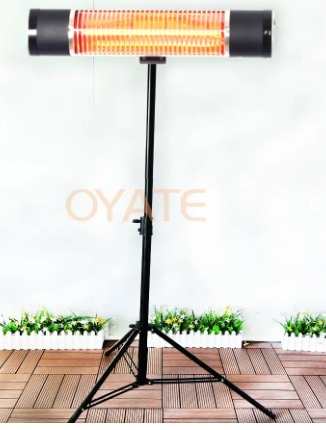
Keeping the Rain Out of Your Infrared Heaters
Outdoor infrared heaters live a tough life. They spend their days swinging between blistering heat from the element and whatever the weather throws at them. When you’re aiming for an IP66 rating, the chassis usually holds up fine. The real headache? The spot where the lead wires enter the housing. That’s where things usually go south.
Why these seals actually fail
A lot of “commercial grade” heaters just use generic silicone. It looks fine at first, but here’s the problem: heat travels. The lamp gets hot, that heat migrates right up the wiring, and those cheap sealants start to bake. They harden. They crack. They shrink. Once that seal pulls away, moisture doesn’t just leak in—it gets sucked in through capillary action, straight to the electrical terminals. Then you get oxidation, a short circuit, and a heater that doesn’t work.
Doing it the right way
We don’t just slap some glue on the wire and call it a day. That’s a recipe for failure. Instead, we use a multi-stage approach. We combine high-Tg epoxy resins—the kind that can actually handle the heat—with heat-shrink tubing that has an adhesive lining. It’s basically a double-barrier. The goal is to make sure the seal can breathe. It needs to expand and contract as the temperature swings without peeling away from the wire jacket. If the chemistry isn’t dialed in for the specific heat of the lamp, it’ll just burn out. We make sure that bond stays rock solid, even when things hit 150°C.
The catch
There is a trade-off here, and it’s a big one. Because the wires are permanently potted to keep the water out, you can’t just swap a wire if someone snags it during installation. You can’t “patch” it. You have to replace the whole sealed assembly. It’s a bit of a pain for repairs, sure. But it’s a lot better than having your entire system short out the first time it rains.