Getting Glass Annealing Right (Without the Heartbreak)
There is nothing worse than spending hours on a piece of lab glassware only to have it shatter for no apparent reason. Usually, it’s because of internal stress. If you don’t neutralize that tension, the glass is basically a ticking time bomb. That’s why we use short-wave infrared elements. To stop those spontaneous fractures, you need a temperature gradient that is incredibly tight. We’re talking about a window so small that a shift of just a few degrees can leave enough tension in the glass wall to ruin the whole piece.
Why we obsess over 0.1°C
Here is the tricky part: glass has a very specific annealing point. It’s that sweet spot where the material can flow just enough to relax the stress, but not so much that the vessel starts to sag or lose its shape. If you go too high? Your glassware sags. Too low? The stress stays locked in. To solve this, we pair our IR elements with PID controllers that handle 0.1°C increments. It lets you hold that “soak” temperature with absolute stability. Think about it like this: small temperature swings make the glass expand and contract over and over. That fatigue creates micro-cracks. By keeping the heat steady, you just get rid of that risk entirely.
The magic of Quartz-Halogen
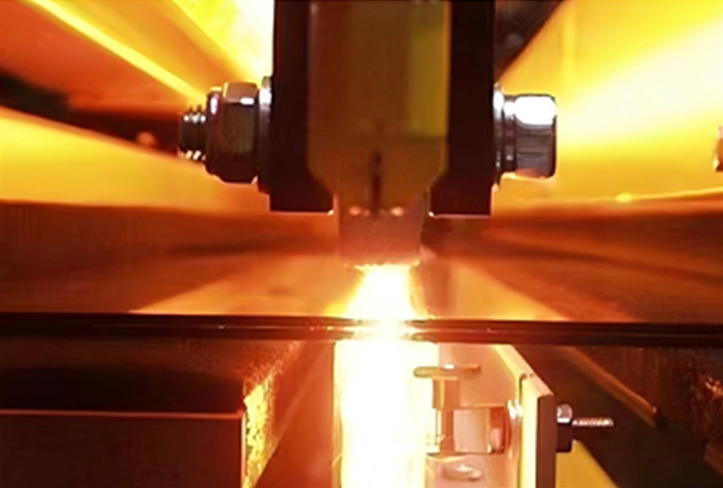
We went with quartz-halogen technology for a simple reason: it’s efficient. The quartz allows short-wave radiation to pass right through without the lamp envelope absorbing the heat. Instead, the energy goes straight into the surface of your glass. The best part is the response time. It’s nearly instant. When the controller cuts the power, the heat flux drops immediately. You don’t get that annoying “thermal overshoot” you usually deal with when using resistive coil heaters, which tend to bleed heat long after you’ve told them to stop.
A few things to watch out for
Now, this kind of precision isn’t “set it and forget it.” You have to keep things clean. A few fingerprints or some dust on the quartz tube can create hot spots. Those spots can burn out your element or heat your glassware unevenly, which defeats the whole purpose. Plus, make sure your housing is sealed and your wiring is rated for the wattage. If you have voltage drops, your 0.1°C calibration won’t mean a thing. Keep the power steady, keep the tubes clean, and your glass will stay intact.